


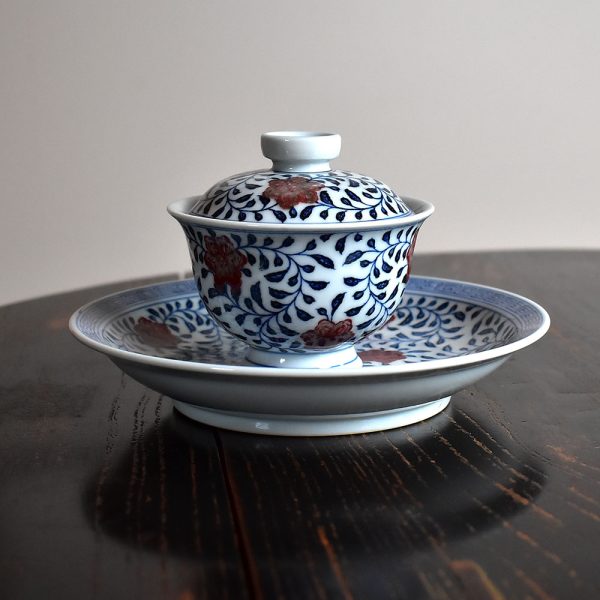
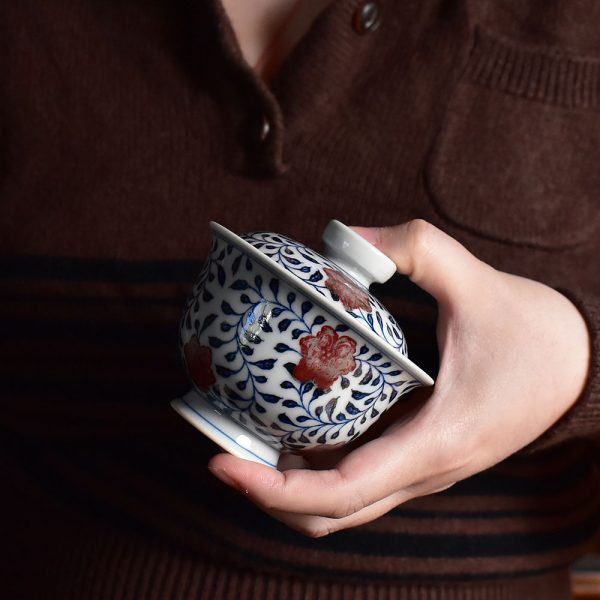
This Gaiwan and tea tray set features the sunflower motif popular during the Ming and Qing dynasties, with an elegant form and vivid ornamentation. The design incorporates the distinctive silver-spot effect (xi ban) unique to blue-and-white porcelain, creating a visual charm full of antique allure. Entirely hand-painted in underglaze cobalt blue, the decoration offers a rich depth of tone and refined layers.
In traditional Chinese porcelain art, the sunflower symbolises positivity, prosperity, and vitality. Its radiating petals represent light and hope, conveying wishes for a thriving family and a bright future. When used on tea wares, the sunflower carries the additional auspicious meaning of warmth, reunion, and heartfelt connection, enriching the tea-drinking experience with cultural depth.
The Gaiwan’s bowl and lid are adorned with finely detailed sunflower patterns, the petals rendered with both delicacy and strength, and the full blossom centre reflecting the symmetry and order celebrated in Ming and Qing blue-and-white porcelain. Deep cobalt blue backgrounds set off the white-outlined petals, giving the motifs a vivid, dimensional quality. Scattered silver speckles are subtly visible, resembling natural metallic glints that lend a refined, time-worn charm when viewed in the light. The interior walls are similarly encircled by multiple sunflower motifs, creating harmony between inside and out.
The matching tea tray has a broad rim and is fully decorated with sunflowers from the centre to the edge in a dense, well-ordered arrangement. Variations in cobalt shading, combined with the naturally dispersed silver speckles, give the flowers a unique interplay of light and shadow, with a softly weathered texture that reflects the beauty of time’s passage. The base ring is inscribed in blue-and-white script, complemented by floral motifs for a finely crafted finish.
Blending the refined craftsmanship of Ming and Qing blue-and-white porcelain with the symbolic richness of the sunflower motif, this set is equally suited for daily tea rituals, special gatherings, or as a collectible and display piece imbued with auspicious meaning.




Reviews
There are no reviews yet.