


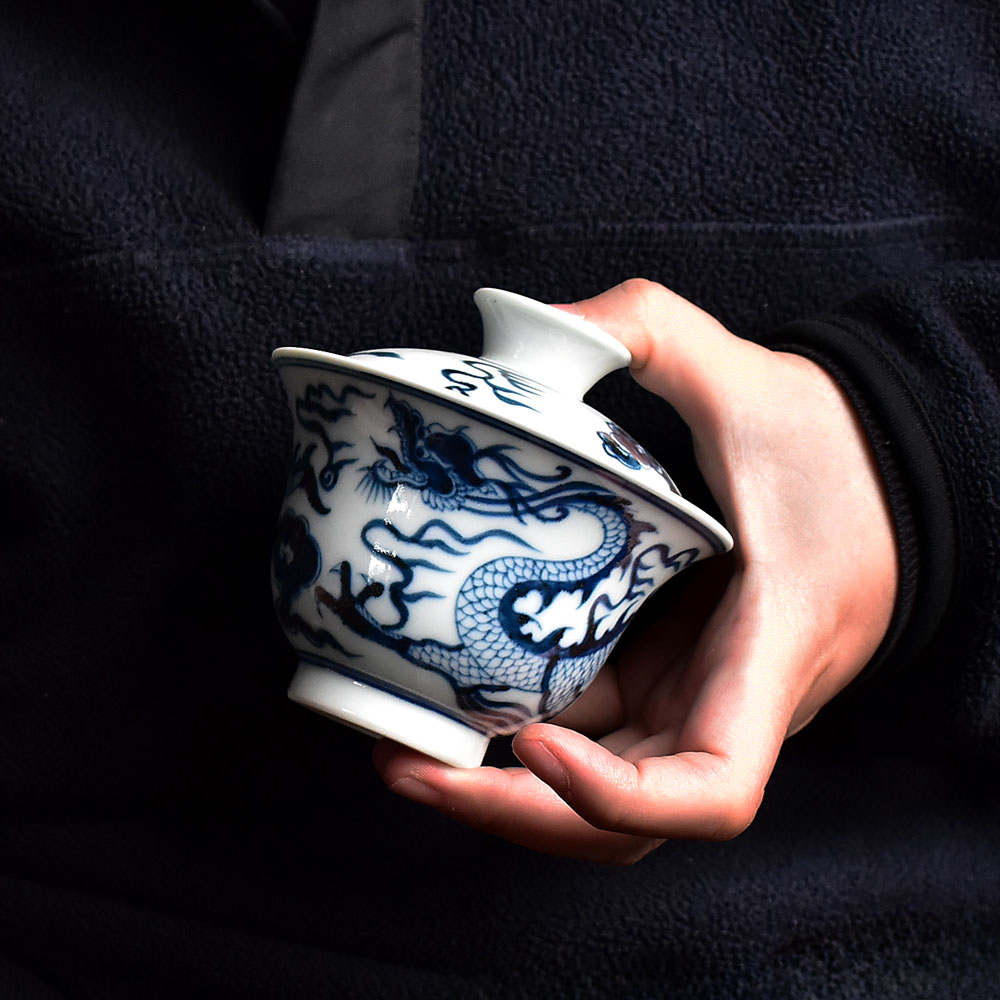
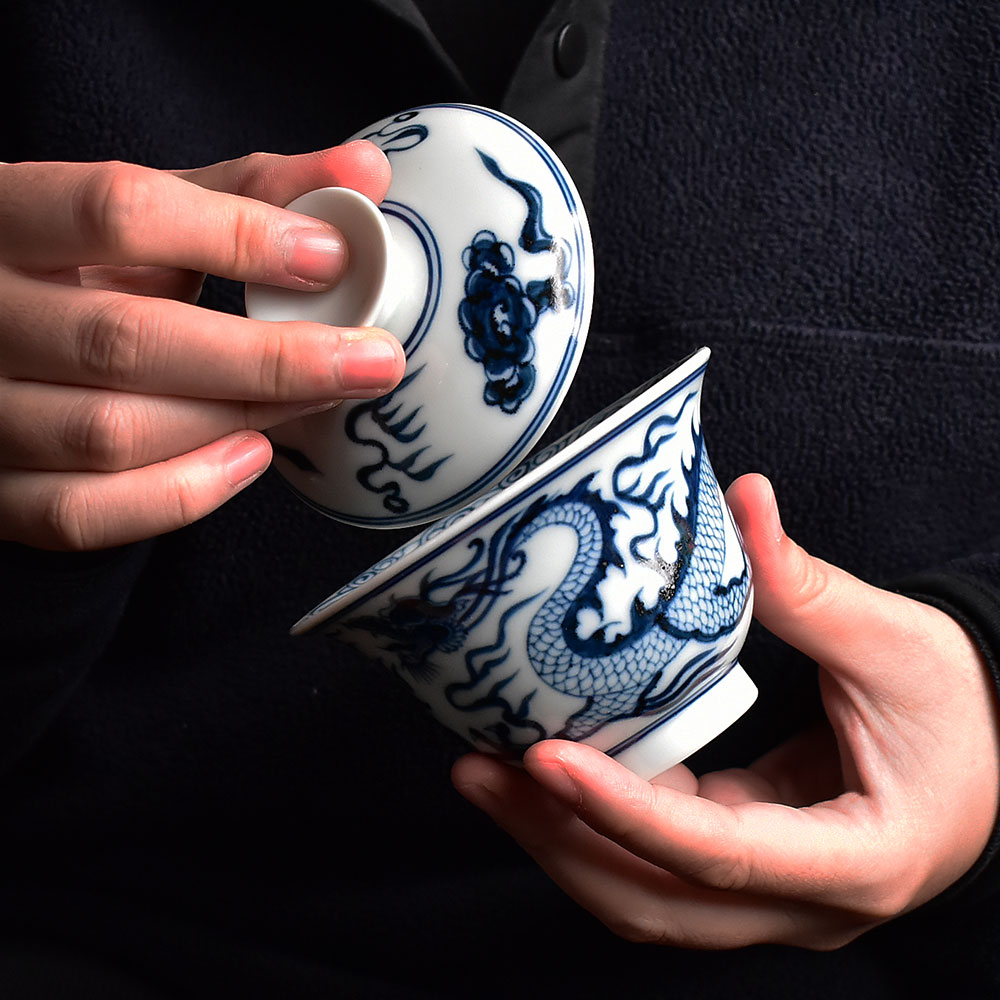
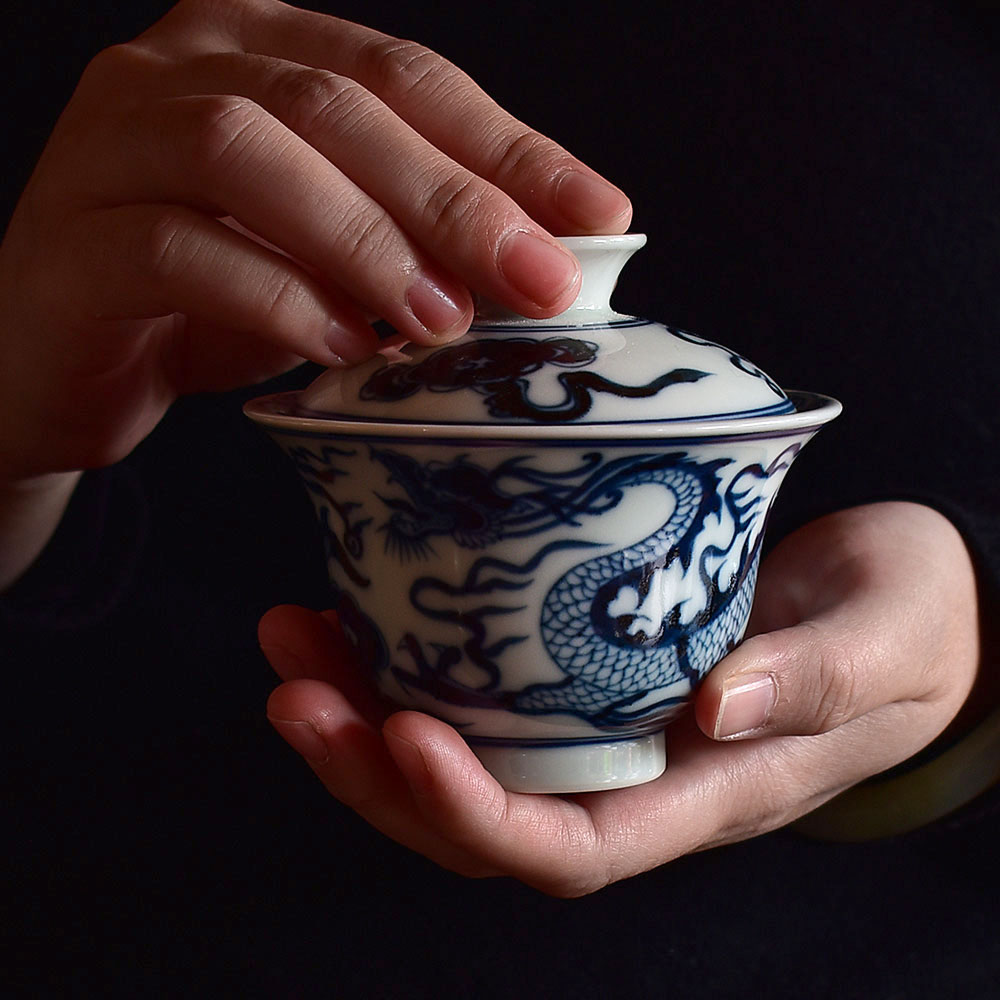
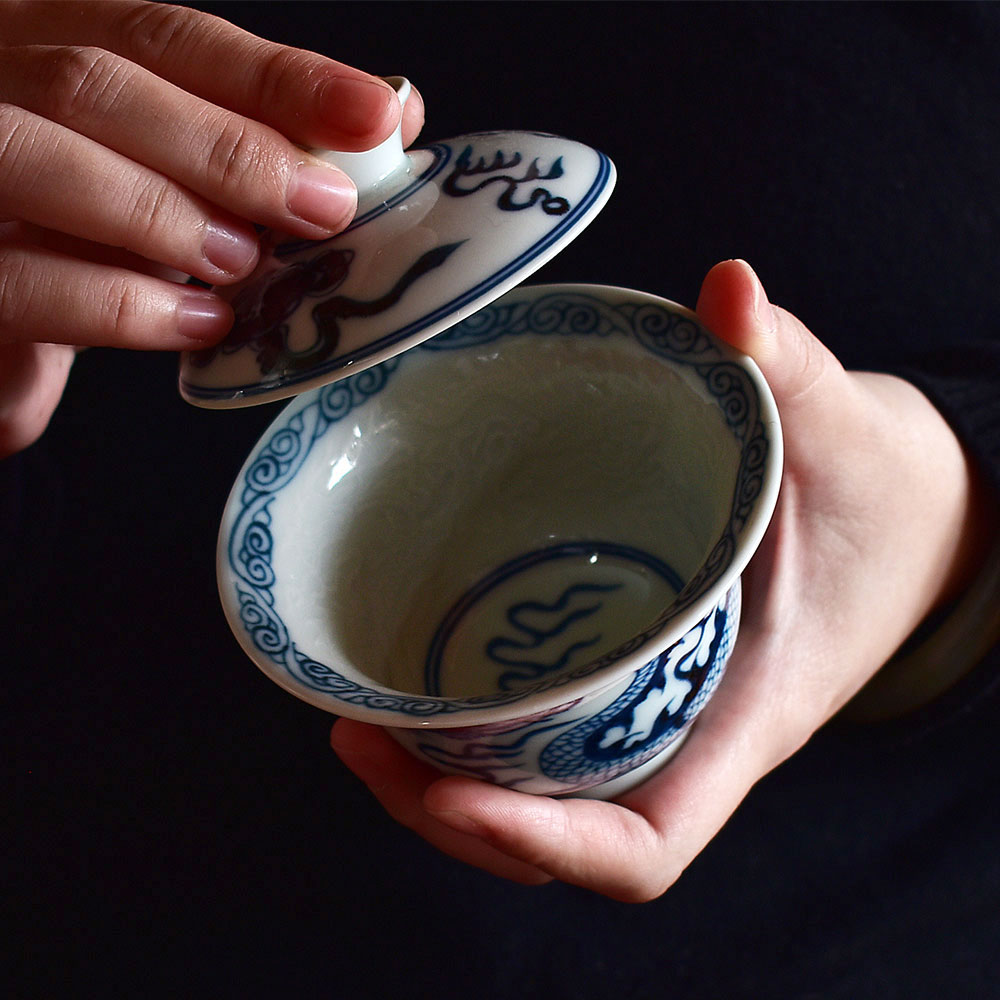
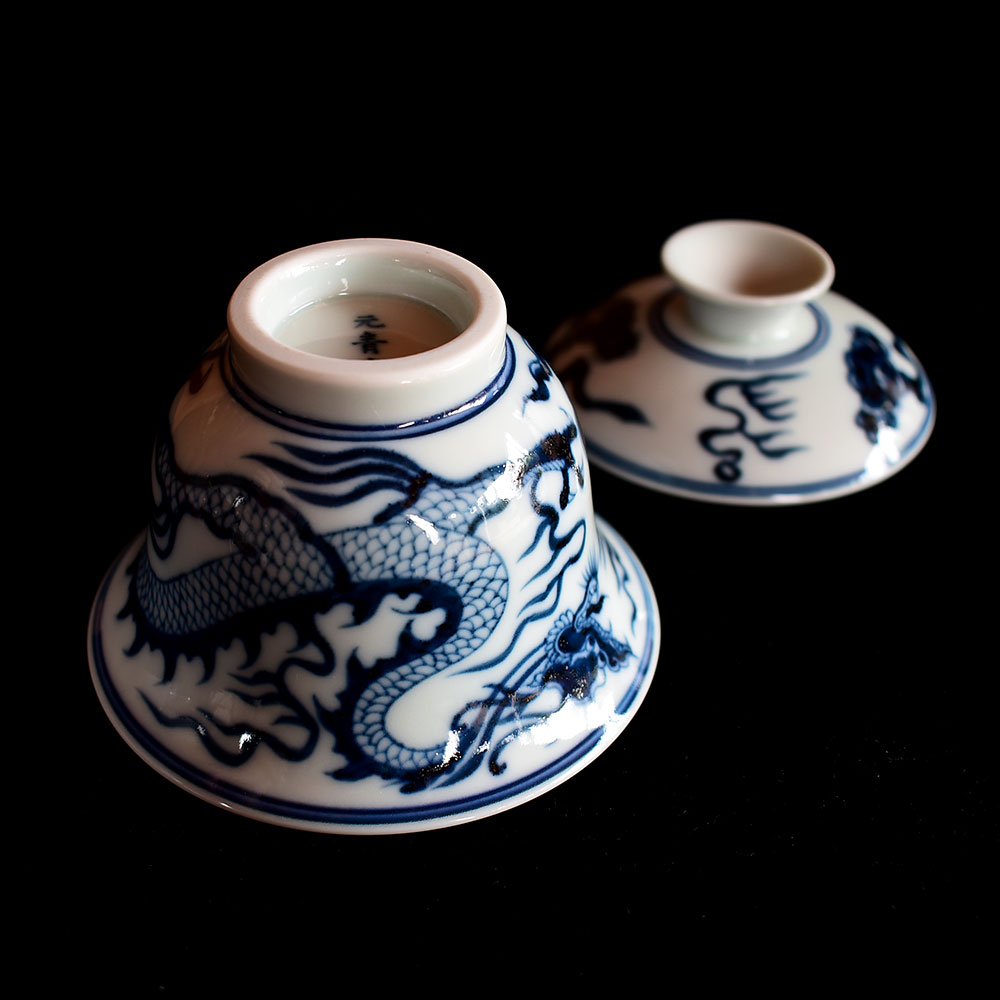
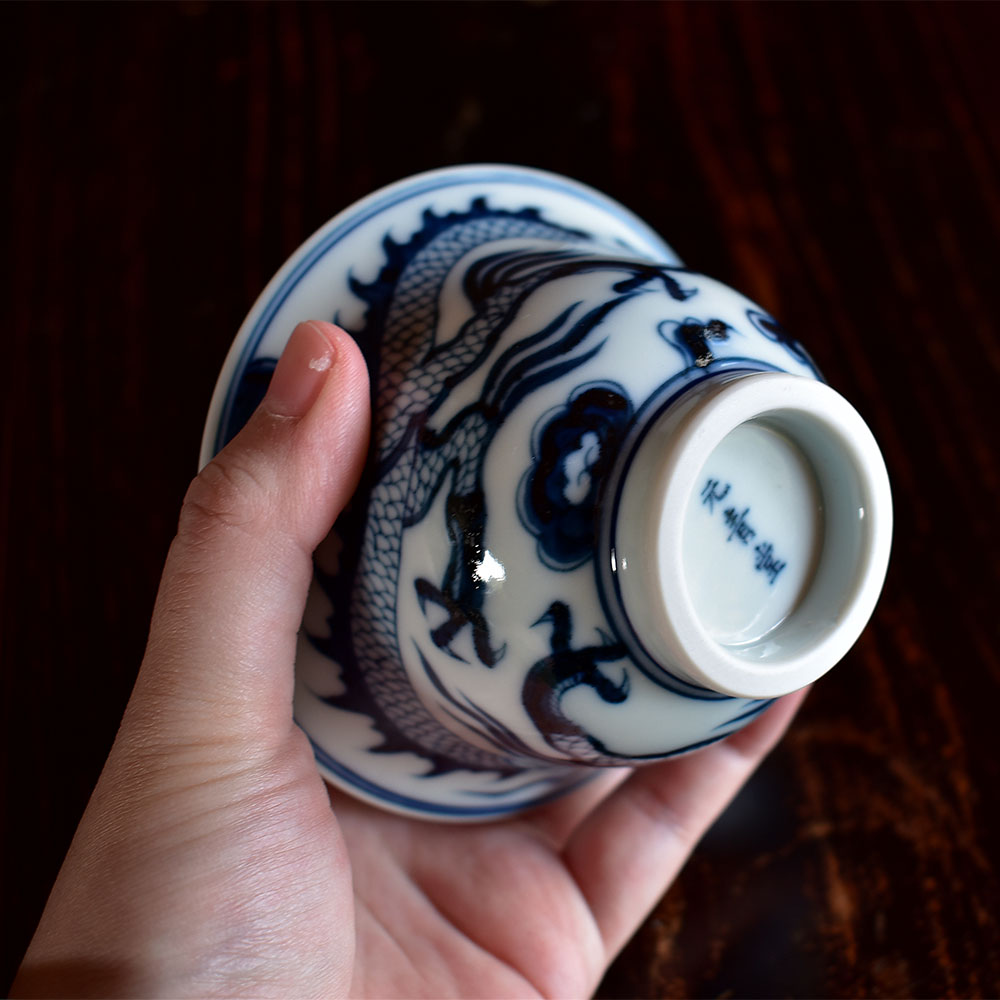
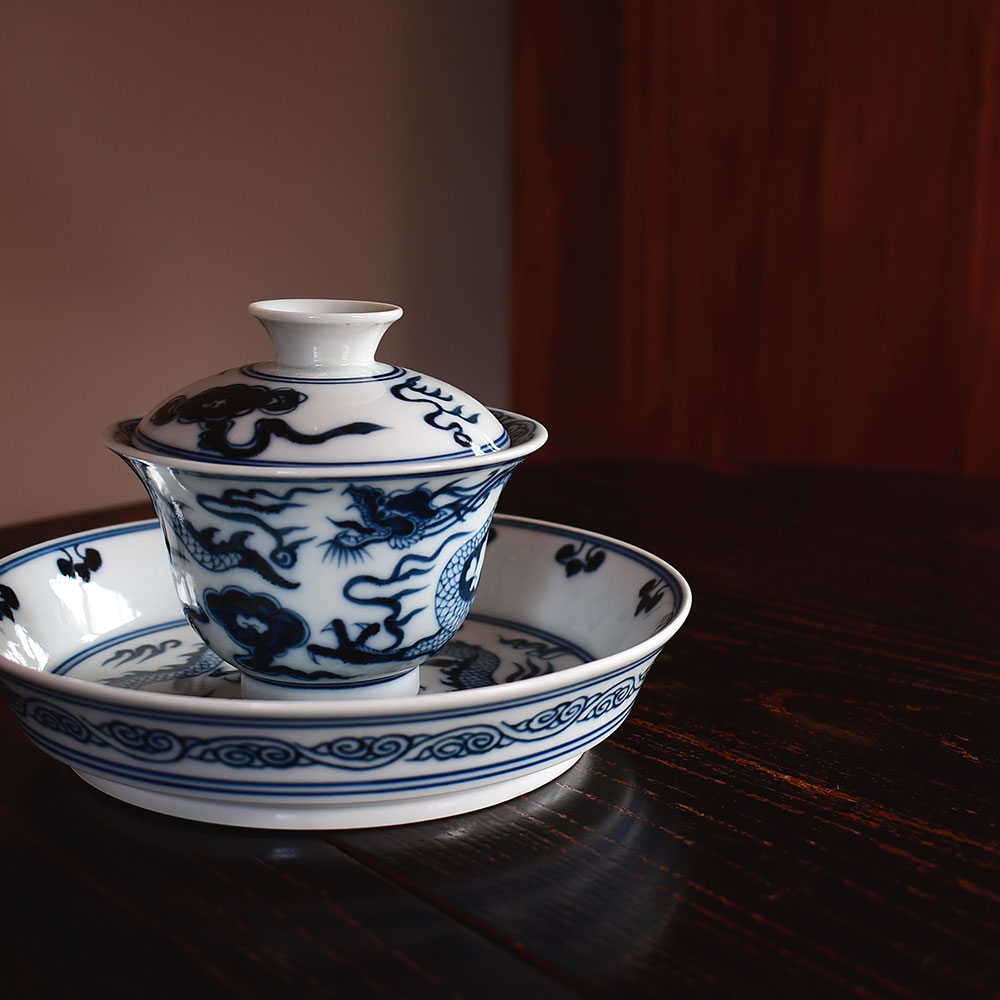
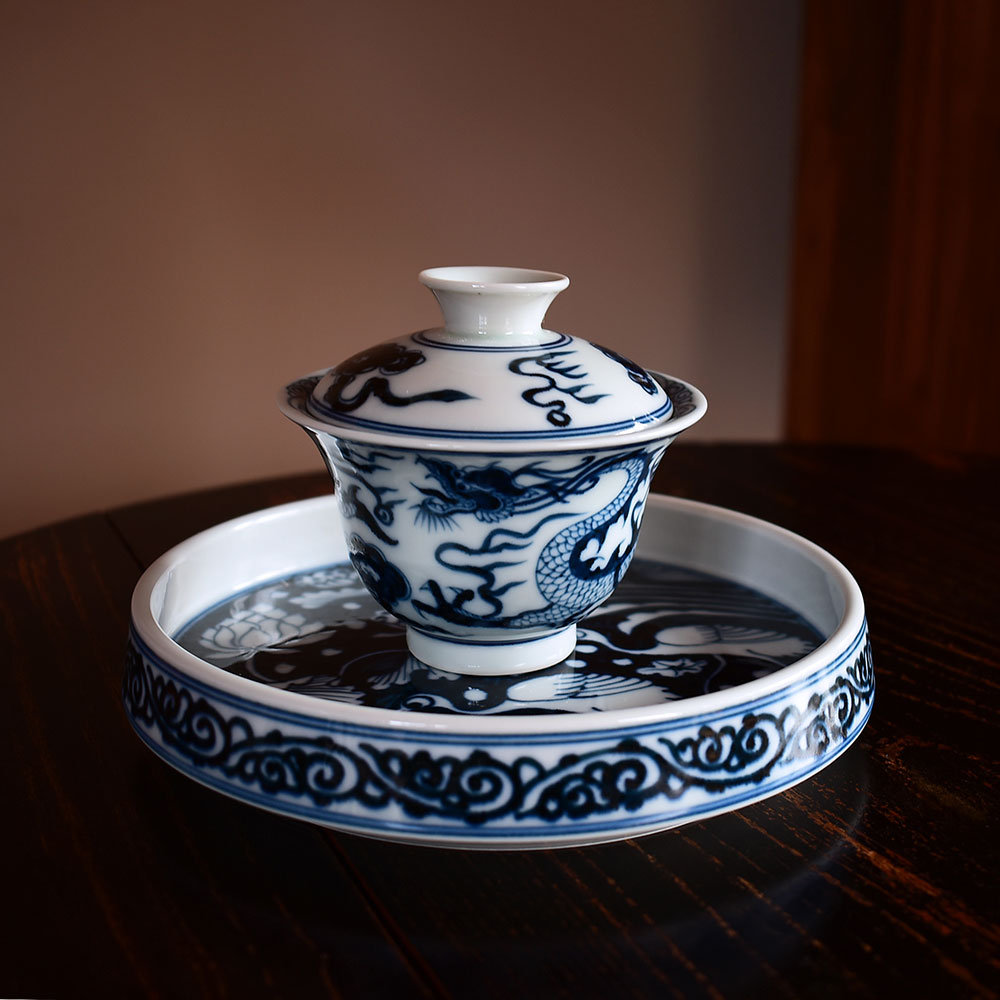
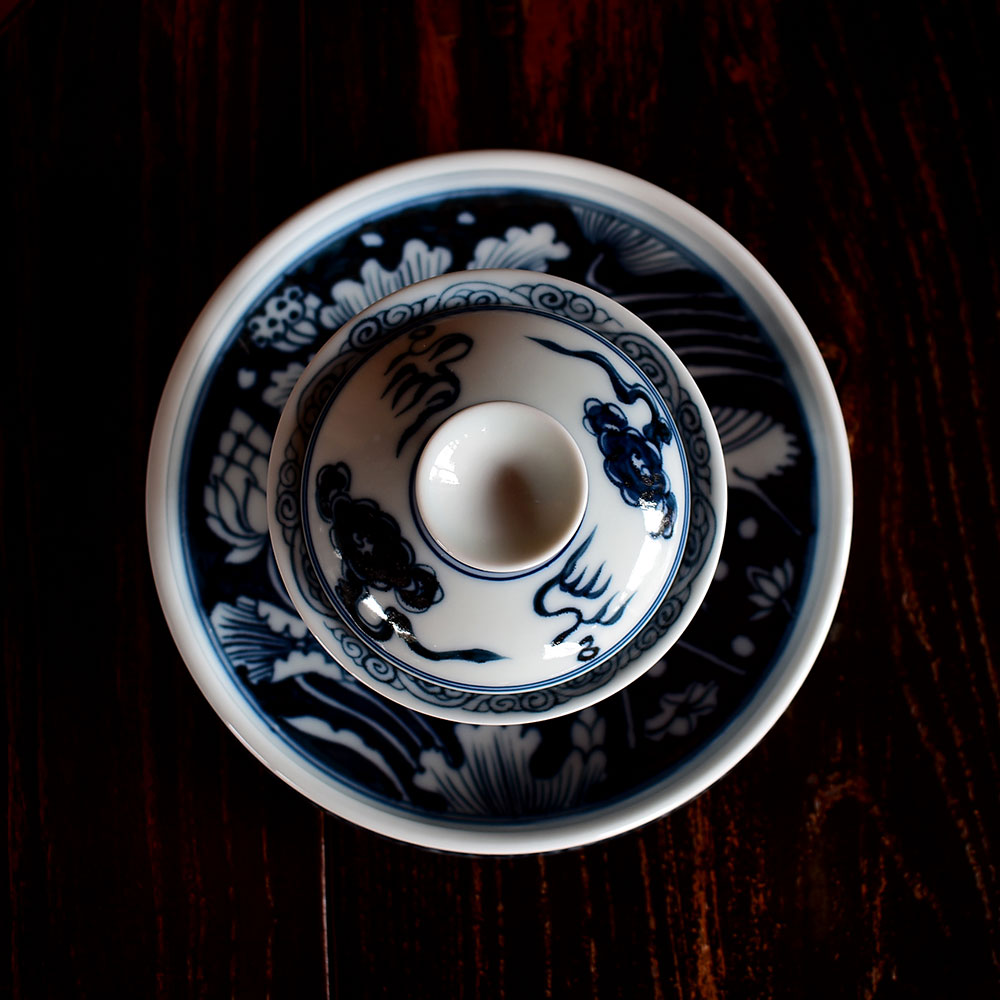
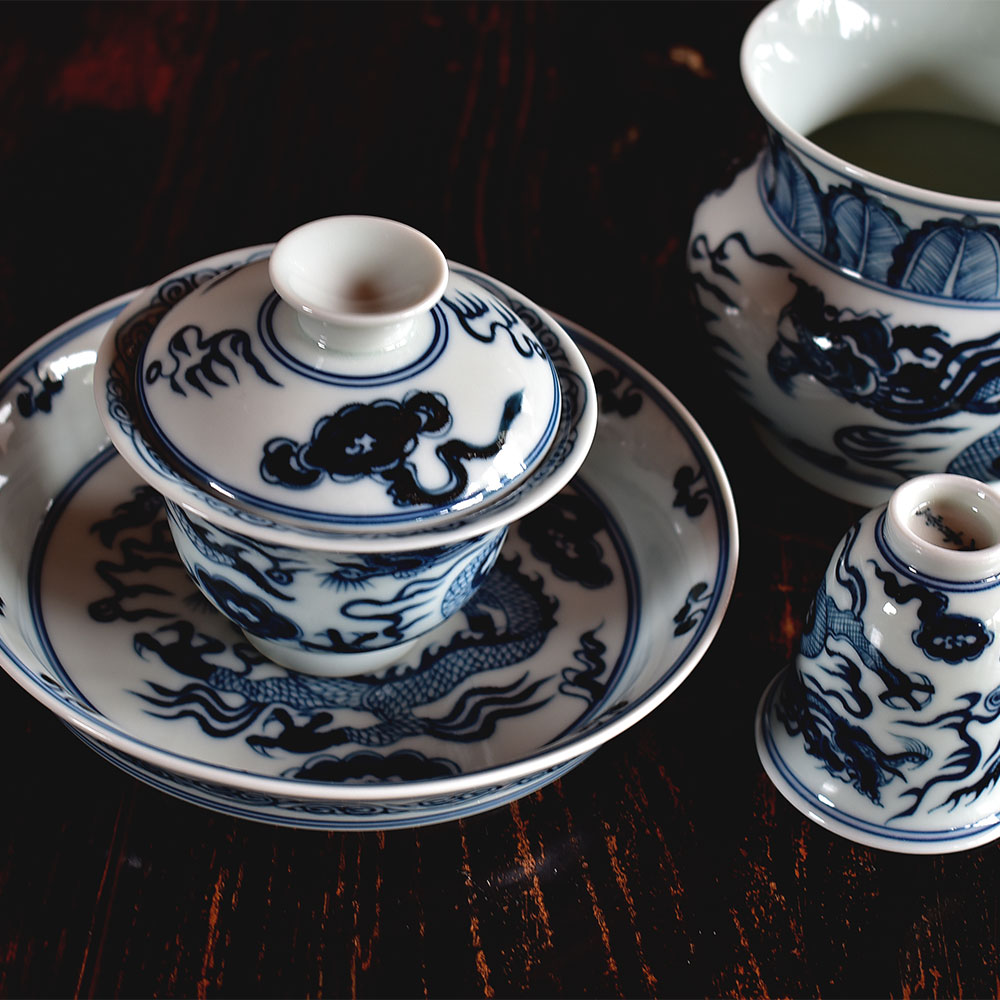
This exquisite gaiwan is crafted in Jingdezhen using the traditional Yuan-style underglaze blue technique. Its form is dignified and balanced, exuding a strong classical charm. The bowl’s silhouette is full and upright, with a gently flared rim and lotus-like curves that rest comfortably and securely in the hand.
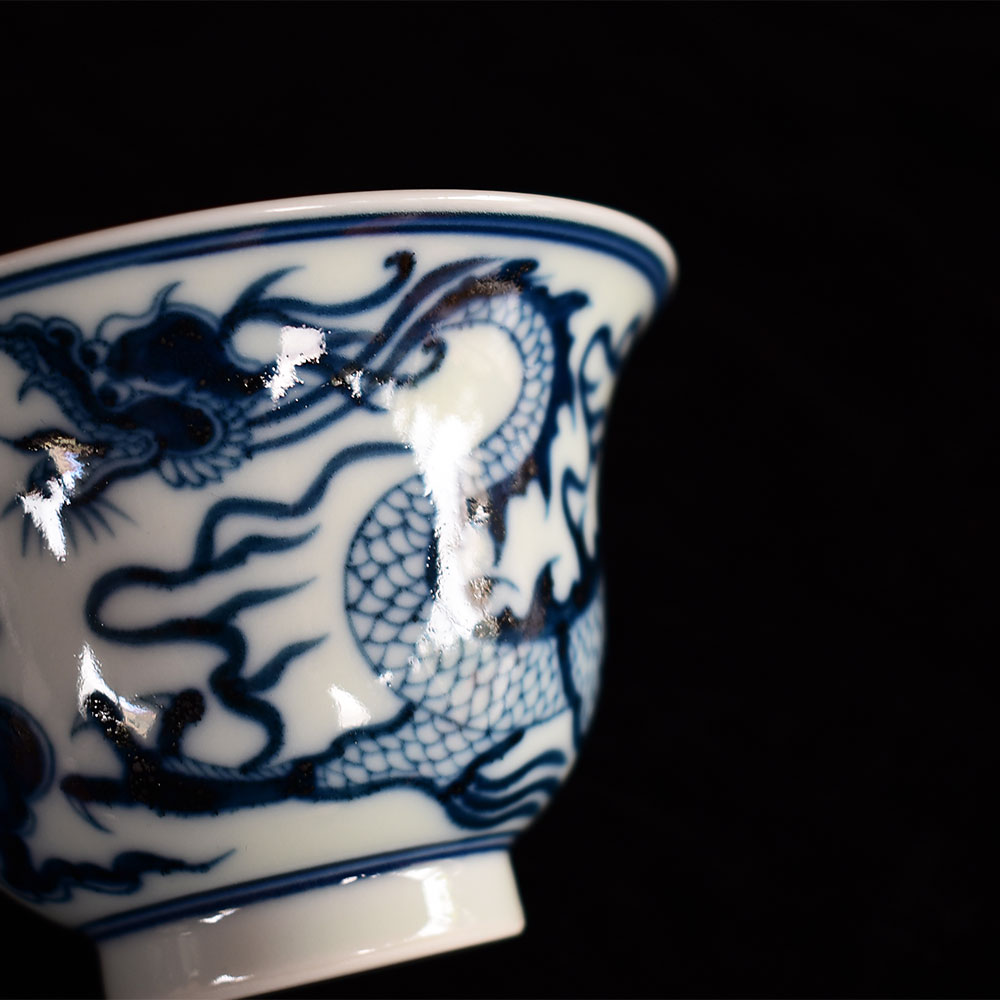
The exterior is adorned with a majestic dragon in flight, hand-painted in cobalt blue. The brushwork is fluid and detailed, capturing the dynamic power and nobility of the mythical beast—an emblem of imperial might in Yuan dynasty porcelain.
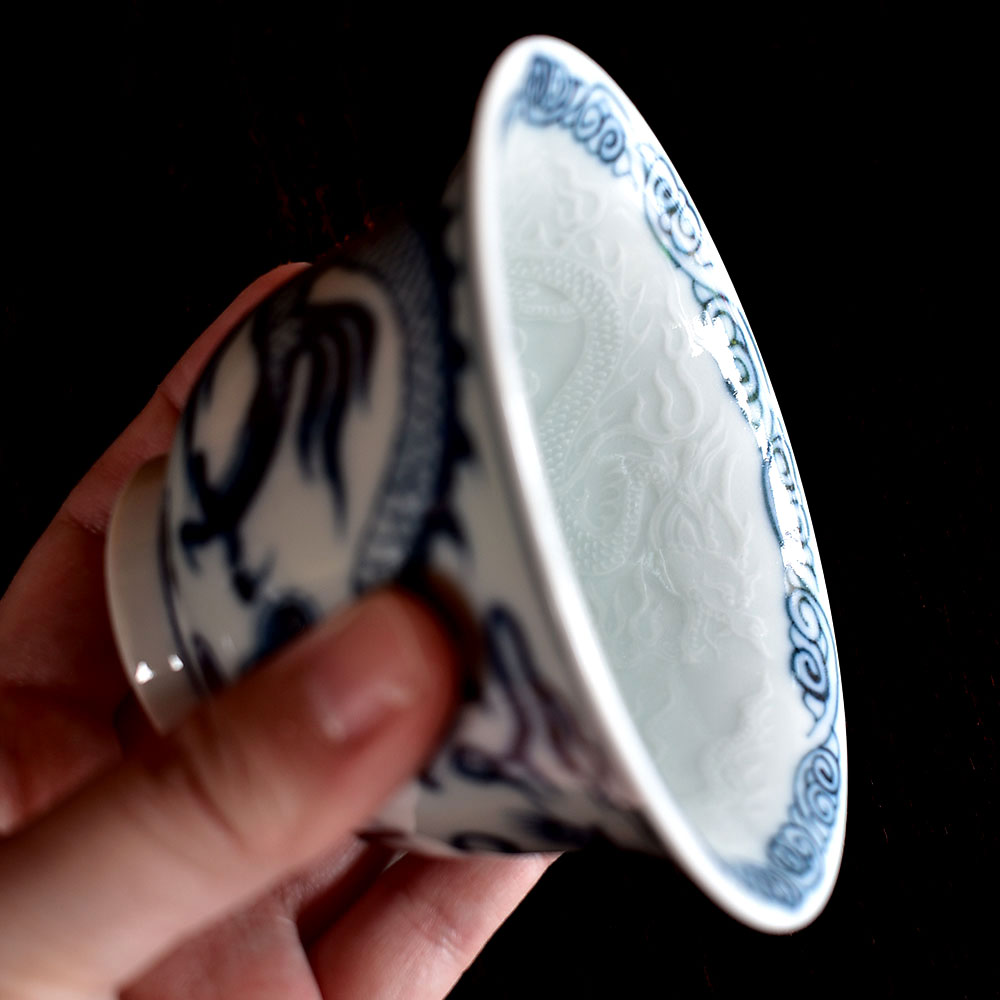
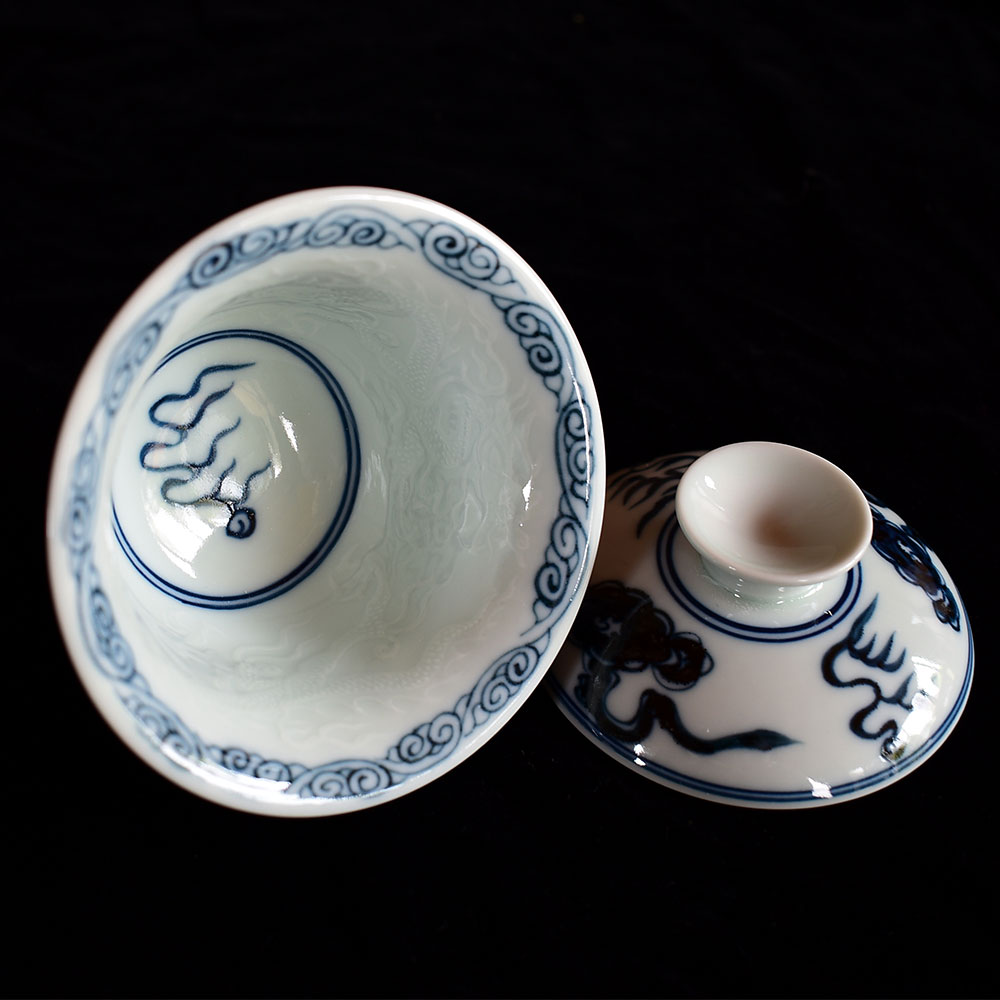
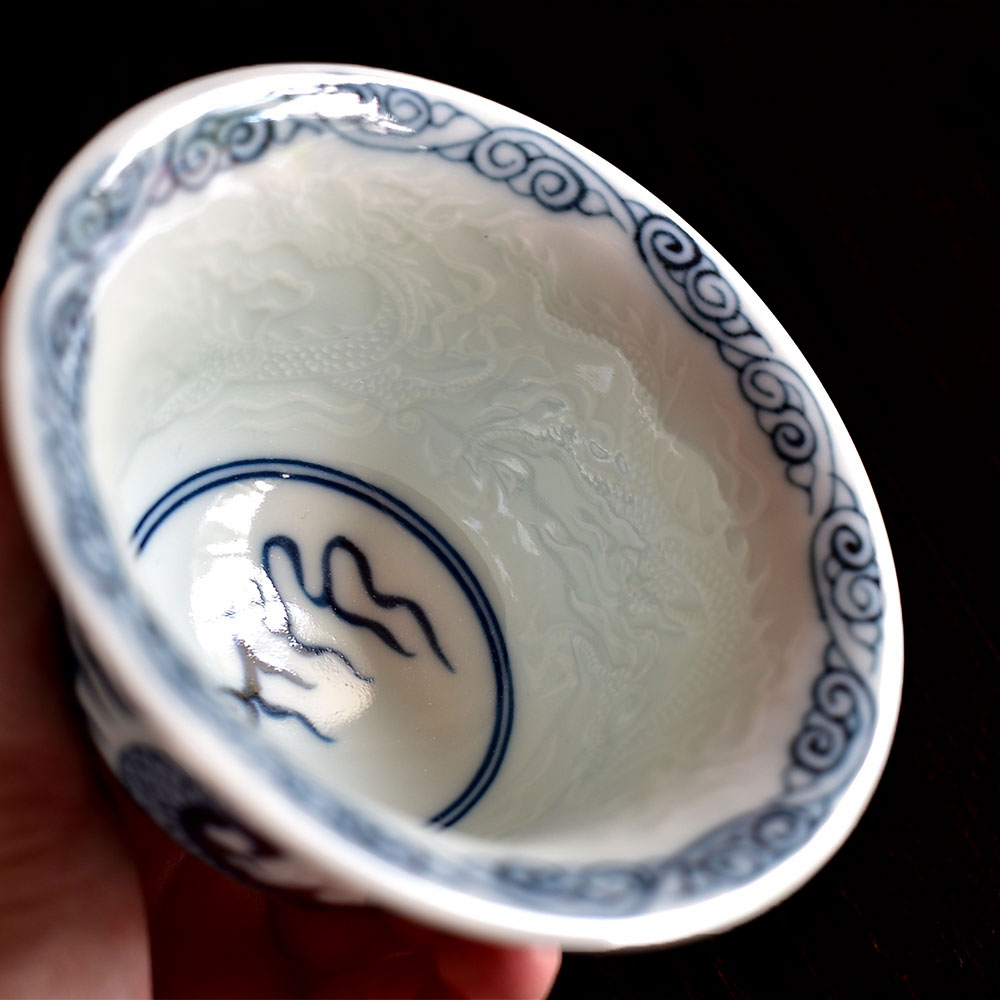
What truly sets this gaiwan apart is the inner wall, where an entire coiled dragon is meticulously incised beneath the glaze using a refined carving technique. The design emerges subtly through the translucent porcelain, revealing itself softly in changing light—like a dragon gliding beneath the surface of the tea. This hidden artistry adds a sense of mystique and elegance to the tea-drinking experience, blending function with poetic beauty.
In Chinese culture, the dragon is a very important symbol and totem with rich symbolism. Firstly, the dragon is one of the most sacred, authoritative, and noble images in ancient Chinese culture. It is the incarnation of the gods of heaven, earth, and water, representing supreme authority and divine power. Secondly, the dragon is considered a symbol of good luck in Chinese culture. As it has the special power to control rainfall, it is also seen as the protector of agriculture, representing a bountiful harvest and prosperity. Additionally, the dragon has many other symbolic meanings, such as longevity, authority, success, courage, and wisdom. In traditional Chinese culture, the dragon is a noble, mysterious, and awe-inspiring image, representing people’s yearning for the unknown and the spirit of exploration.
For Yuan blue and white porcelain refers to the blue and white porcelain produced during the Yuan dynasty (1271-1368) in China. The Yuan dynasty was an important period in the history of Chinese porcelain and one of the peaks of Chinese porcelain art. As one of the representatives of that era, Yuan blue and white porcelain exhibited unique artistic styles and technical levels. The characteristic of Yuan blue and white is the use of cobalt blue pigment for painting, which is made of cobalt oxide. After firing, the colour is bright and rich, with extremely high decorative effect. Yuan blue and white porcelain has various shapes, thick and heavy, concise, and fluent lines, and stable and solemn shapes, all made exquisitely.
The evolution of Yuan blue and white is based on the foundation of Tang and Song celadon. Firstly, the glaze colour was improved and innovated. Unique white glaze, eggshell glaze and blue-white glaze were invented to make the glaze crystal clear. Cobalt pigment was imported for glaze colouring. Or using the pigment made from domestic materials.
The formation of tin spots on Yuan blue and white is due to the high content of iron elements in local parts of the blue pigment. After reaching saturation in the high-temperature glaze solution and cooling down, the iron elements in the supersaturated part start to precipitate. If the iron content of the blue pigment is higher and the cooling rate is appropriate, tin spots are more likely to appear on the surface of the ware.
In addition to firing and materials, the formation of tin spots also involves the factor of glaze material. During the painting process, tin spots can also be formed due to the accumulation of blue pigment. Tin spots are more likely to appear on the surface of the ware at the intersections and the starting and ending points of brushstrokes. The formation of tin spots can be said to be a natural creation or an artificial decoration.
This gaiwan features a relatively thick porcelain body, exuding a strong sense of antiquity and traditional charm. It is crafted using the Su Ma Li Qing glaze material (a kind of blue pigment), known for its rich, deep tone and prominent “tin-spot” effect—evoking the aesthetic of bygone eras. The combination of underglaze blue painting with subtle incised decoration highlights the exquisite craftsmanship and layered complexity of the piece, underscoring its value as a collectible work of art.


Reviews
There are no reviews yet.