Colourful Tea Cups

Colourful tea cups bring vibrancy, joy and artistic charm to every tea moment. Their lively tones and delicate artwork brighten the table, giving each sip a sense of celebration. At Hey China we love how these cups add personality and warmth to your tea ritual, turning ordinary tea time into something beautifully expressive.
Filters

    Product Filters

    *Type and press 'Enter' to search

    Filter by Category

    • 12 Chinese Tea

    Filter by Pu-erh Type

      Filter by Type

        Filter by Taste

          Filter by Origin

            Filter by Caffeine Level

              Filter by Leaf Form

                Filter by Brand

                  Filter by Colour

                    Filter by Material

                      Filter by Number of Pieces

                        Filter by Colour

                          Filter by Material

                            Filter by Size

                              Filter by Colour

                                Filter by Material

                                  Filter by Size

                                    Filter by Colour

                                      Filter by Material

                                        Filter by Size

                                          Filter by Colour

                                            Filter by Material

                                              Filter by Origin

                                                Share

                                              12 Products

                                              • Blue and Coloured Old-Style Reticulated GaiwanBlue and Coloured Old-Style Reticulated Gaiwan Out of Stock
                                                $26.99

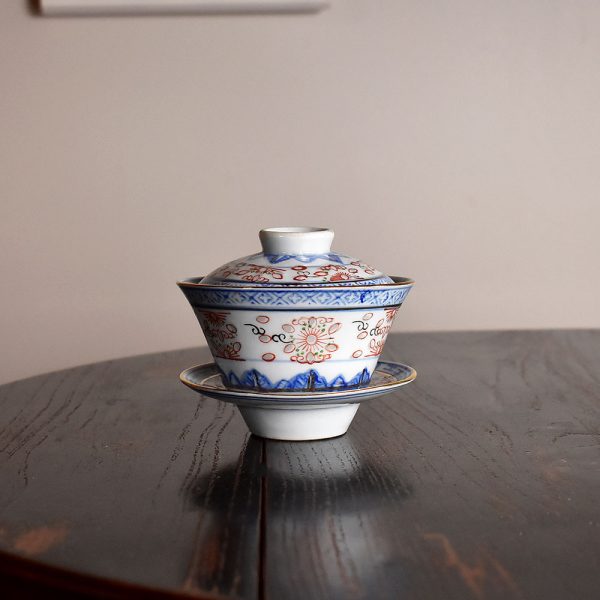
                                                This blue and coloured reticulated gaiwan features a proper yet slightly rough form, typical of early or folk kiln wares. The body is relatively thick, with uneven glaze lustre and somewhat freehand cobalt lines, giving it an authentic handmade texture. The vessel is crafted using the traditional reticulated carving technique, with tiny translucent holes visible when held to light. Under the glaze, blue decoration is applied, while red and green overglaze enamels add a lively contrast. Though the colouring lacks delicacy, it carries a rustic charm. The lid, bowl, and saucer form a complete three-piece set, simple and steady in proportion, reflecting the aesthetics of old-style Jingdezhen porcelain.

                                                Reticulated porcelain, also known as ‘transparent porcelain,’ first appeared during the Jiajing period of the Ming dynasty and reached its peak during the Kangxi and Qianlong reigns of the Qing dynasty. Its distinctive technique involves carving fine holes into the clay body before glazing and high-temperature firing, allowing glaze to fill the openings and form translucent ‘windows.’ When illuminated, these patterns emit a soft glow. Due to the complexity of the process and its low success rate, reticulated porcelain has long been regarded as one of Jingdezhen’s unique crafts. By the late Qing and Republic periods, blue-and-coloured reticulated gaiwans became common household items—less refined in craftsmanship but closer to everyday life.

                                                This particular gaiwan belongs to that period of practical ware. Though not luxurious, it embodies the warmth of hand-fired ceramics and the quiet charm of daily use.

                                              • Sliver-trimmed Chinese Orchid GaiwanSliver-trimmed Chinese Orchid Gaiwan Out of Stock
                                                $31.99

                                                This sliver-trimmed Gaiwan exemplifies the beauty of traditional Chinese teaware, characterized by its elegant design and intricate detailing.

                                                Features:

                                                • Porcelain Body: The Gaiwan is crafted from high-quality porcelain, ensuring a smooth, refined surface that enhances the tea-drinking experience. The porcelain’s delicate nature adds an air of sophistication.
                                                • Hand-Painted Design: The Gaiwan features a hand-painted Chinese orchid motif, rendered in soft, natural hues. This artwork brings a sense of natural beauty and tranquility, capturing the essence of traditional Chinese aesthetics.
                                                • Silver Trim: The rim of the Gaiwan is accented with a fine silver trim, adding a touch of elegance and refinement. This detail enhances the visual appeal and highlights the meticulous craftsmanship.
                                                • Minimalist Elegance: The simple yet graceful design reflects minimalist aesthetics, making this Gaiwan suitable for both traditional and contemporary tea settings. Its understated elegance ensures it blends seamlessly into any decor.

                                                This Gaiwan is perfect for those who appreciate the art of tea-making and the beauty of traditional craftsmanship. Whether used for personal enjoyment or shared during tea gatherings, it enhances the tea experience, combining function with artistic elegance.

                                              • Tiny Sliver-trimmed Chinese Orchid TeacupTiny Sliver-trimmed Chinese Orchid Teacup
                                                $13.99

                                                This tiny teacup is a testament to traditional artistry and meticulous attention to detail. The porcelain body ensures a refined tea-drinking experience, allowing the true flavours and aromas of your tea to shine through.

                                                The hand-painted Chinese orchid pattern brings a sense of natural beauty and tranquillity, while the silver trim adds a touch of sophistication. This teacup’s minimalist design makes it a perfect fit for both traditional and contemporary tea settings.

                                                Features:

                                                • Porcelain Body: Made from high-quality porcelain, this teacup is both sturdy and durable, providing a smooth and refined touch.
                                                • Chinese Orchid Design: The teacup features a beautiful hand-painted Chinese orchid pattern in soft, natural hues, adding a touch of serenity and elegance to your tea-drinking experience.
                                                • Silver Trim: The rim of the teacup is elegantly finished with a silver trim, enhancing its visual appeal and adding a sophisticated touch.
                                                • Minimalist Elegance: The simple yet graceful design reflects a minimalist aesthetic, making this teacup a versatile addition to any tea set or decor.

                                                It is ideal for everyday use or special occasions; this tiny teacup is perfect for enjoying your favorite teas. Its elegant appearance and high-quality craftsmanship make it a beautiful addition to any tea collection.

                                                Whether you are enjoying a peaceful moment alone or hosting a tea gathering with friends, it will elevate your tea experience, combining the best of traditional craftsmanship and modern elegance.

                                              • Fu Lu Shou Old-Style GaiwanFu Lu Shou Old-Style Gaiwan
                                                $130.99

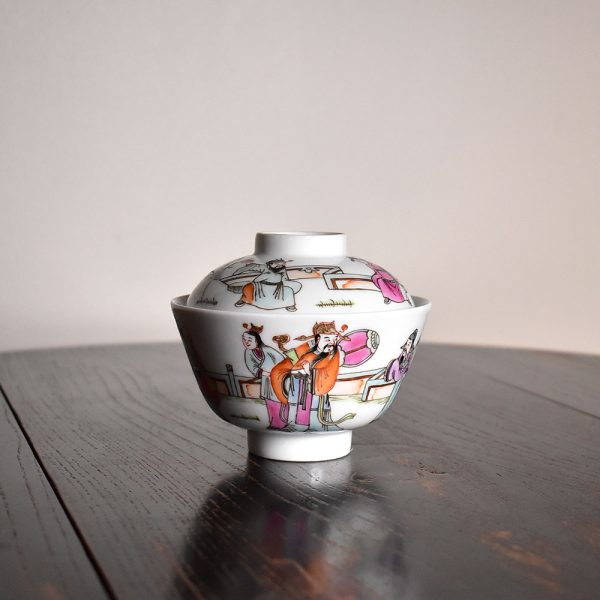
                                                This Gaiwan was crafted using techniques from China’s Cultural Revolution period, primarily handmade. Its firing process followed the craftsmanship and clay formulas of the 1970s, which cannot be compared to modern porcelain production in terms of material and refinement. The body, glaze, and overall workmanship appear somewhat rough, yet they reflect the unique historical imprint and handmade character of that era.

                                                The decoration depicts a traditional story scene, painted in famille rose technique to illustrate figures in interaction. The garments are rendered in tones of orange, pink, green, and purple, with fine flowing lines and clear layering of colors, echoing the artistic style of Qing dynasty famille rose porcelain.

                                                The imagery portrays the three auspicious deities of Fu, Lu, and Shou, each carrying profound symbolic meaning:

                                                • Fu: symbolizing happiness, family harmony, and prosperity in descendants.
                                                • Lu: representing official rank, status, and wealth.
                                                • Shou: embodying longevity and health.

                                                Together they express people’s collective wishes for a good life and enduring blessings. Such motifs were common in traditional porcelain decoration, often used in birthday celebrations, gifts, and festive occasions, carrying rich cultural significance.

                                                Although the craftsmanship of this Cultural Revolution period famille rose gaiwan is relatively simple, the auspicious meaning conveyed by its imagery remains vivid. It is not only a functional tea vessel but also a piece of old porcelain that embodies both historical memory and traditional culture.

                                              • Blue and Coloured Reticulated CupBlue and Coloured Reticulated Cup
                                                $7.99

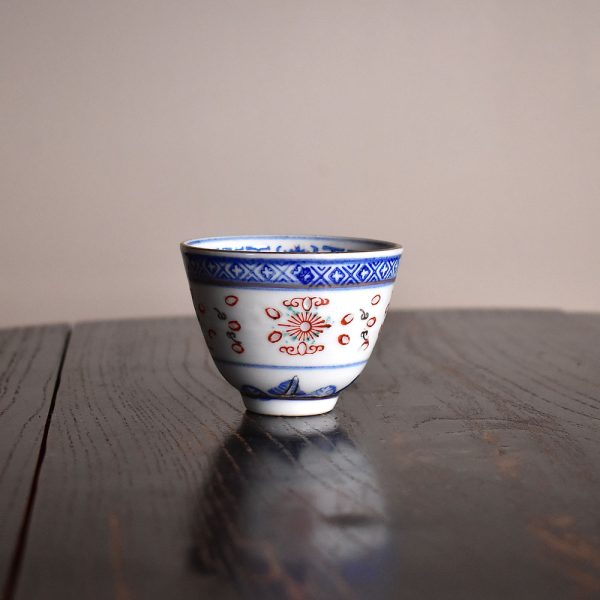
                                                This is an old-style blue and reticulated teacup, with a dense and fine body and a soft, mellow glaze that reflects the traditional characteristics of Jingdezhen folk kilns. The form is small and upright, well-proportioned, with smooth natural lines typical of early gongfu tea cups. The exterior is decorated with entwined floral motifs in underglaze blue, complemented by touches of overglaze red, creating a modest yet charmingly rustic visual harmony.

                                                The entire cup is crafted using the traditional reticulated (linglong) technique, with fine translucent holes visible when held to light. The glaze seeps into these openings during firing, forming semi-transparent ‘windows.’ Under illumination, the patterns faintly shimmer through the porcelain, revealing a soft and gentle translucence. The base is marked ‘Made in China,” indicating that it was produced in the mid-20th century in Jingdezhen as an old-style folk kiln piece. Compared with official kiln wares, this cup shows a rougher finish—blue lines appear slightly blurred and the glaze varies in thickness—but these imperfections enhance its authenticity and capture the warmth of traditional handcraftsmanship.

                                                Reticulated porcelain, also known as ‘transparent porcelain’, originated during the Jiajing period of the Ming dynasty and reached its peak in the Kangxi and Qianlong reigns of the Qing dynasty. The process is highly intricate, involving the carving of tiny holes in the clay body before glazing and high-temperature firing, allowing the glaze to fill the openings and produce a luminous, translucent effect. By the late Qing and Republic periods, blue and reticulated tea wares had become common household items, valued for their practicality and for embodying the daily charm of traditional Chinese tea culture.

                                              • Kiln-Transformed Aurora Blue Glaze Gourd-Shaped Fairness CupKiln-Transformed Aurora Blue Glaze Gourd-Shaped Fairness Cup
                                                $39.99

                                                This Kiln-Transformed Aurora Blue Glaze Gourd-Shaped Fairness Cup is a fine piece that combines traditional craftsmanship with modern aesthetics. Its unique design and variable glaze color present a stunning aurora-like effect.

                                                Design and Appearance

                                                • Shape: The fairness cup features a gourd-shaped design with smooth, flowing lines, making it both aesthetically pleasing and practical. The design of the spout allows for controlled pouring, preventing spills.
                                                • Glaze Color: The exterior glaze is primarily aurora blue, showcasing a rich variety of colors. It transitions from deep blue to soft white, resembling the dance of the aurora in the night sky. The interior glaze is mainly purple and blue, presenting a mysterious starry sky effect.

                                                Craftsmanship and Techniques

                                                • Kiln-Transformation Technique: Kiln-transformation involves controlling the temperature and atmosphere during firing to create natural and unpredictable changes in the glaze. Each kiln-transformed porcelain piece is unique, with different glaze colors and patterns. This fairness cup’s glaze naturally flows during firing, creating beautiful color gradients and texture effects.
                                                • Aurora Blue Glaze: Aurora blue glaze is a special type of glaze that, after high-temperature firing, presents variations in blue and other colors. This glaze is not only visually stunning but also highly durable and resistant to corrosion.

                                                Function and Practicality

                                                • Purpose of the Fairness Cup: In tea ceremonies, a fairness cup is used to evenly distribute tea, ensuring each participant receives tea of the same concentration. The gourd-shaped design is not only beautiful but also offers a comfortable grip and practical use.
                                                • Artistic Value: This fairness cup is not just a practical tea utensil but also a piece of art. Its unique glaze color variation and elegant shape make it highly collectible and visually appealing.

                                                This Kiln-Transformed Aurora Blue Glaze Gourd-Shaped Fairness Cup is a charming tea utensil, whether for daily use or as a collectible art piece. Every use is an appreciation and enjoyment of traditional craftsmanship and modern aesthetics.

                                                Attention:

                                                • Kiln-fired glaze variations are often unpredictable and can result in a wide range of colours from a single firing.
                                                • The porosity of ceramics varies depending on the materials used, the recipe, the pressure applied, the duration of pressure, the thickness of the body, the firing temperature, and the duration of firing. Generally, the finer the porcelain, the smaller the pores, while the coarser the pottery, the larger the pores.
                                                • Since porcelain is made from clay, the amount of iron spots present in the clay varies depending on the mineral content of the soil. These iron spots are harmless and do not affect the use of the porcelain. Removing them would require the use of chemical materials, which can be damaging to high-quality porcelain.
                                                • Handmade products are not perfect, and each piece can have differences in size, shape, colour, and other aspects.
                                              • Eight Immortals Crossing the Sea Vintage TeacupEight Immortals Crossing the Sea Vintage Teacup
                                                $97.99

                                                This teacup was crafted using techniques from the Cultural Revolution period in China, primarily handmade. Its firing process followed the methods and porcelain clay formulas of the 1970s, which are quite different from modern porcelain production. As a result, the body, glaze, and overall craftsmanship appear somewhat rough, yet precisely because of this, it bears the unique historical imprint and handmade character of that era.

                                                The decoration is rendered with famille rose techniques, depicting the traditional story of ‘Eight Immortals Crossing the Sea,’ encircling the cup. Each of the eight immortals is shown with their distinctive attributes: Tieguai Li with his iron crutch, Lü Dongbin with his sword, Han Xiangzi with his flute, He Xiangu with her lotus, Lan Caihe with a flower basket, Zhang Guolao with his fish-drum, Cao Guojiu with his jade tablet, and Zhongli Quan with his gourd. The figures are vivid and expressive, either seated in contemplation or caught in lively gestures, delicately and vividly portrayed.

                                                As a traditional auspicious theme, “Eight Immortals Crossing the Sea” symbolizes each displaying their unique powers to overcome difficulties, carrying the meaning of dispelling misfortune and ensuring blessings. It also embodies wishes for prosperity, longevity, and peace. The famille rose palette is soft and elegant, with clothing in tones of orange, purple, blue, and pink, characterized by fine, flowing lines that reflect the artistic style of Qing dynasty famille rose porcelain.

                                                This famille rose Eight Immortals teacup is not only a practical vessel for daily tea gatherings but also a cultural artifact that carries both the imprint of its historical period and auspicious meaning. Within its roughness lies the authenticity of handmade work, and within its simplicity shines a spark of artistry.

                                              • Doucai Butterfly and Flower Horseshoe Shape GaiwanDoucai Butterfly and Flower Horseshoe Shape Gaiwan Out of Stock
                                                $482.99

                                                This exquisite Gaiwan from Jingdezhen showcases the traditional Doucai technique, featuring a unique horseshoe-shaped body. The flared rim and flowing lines create an elegant silhouette that fits naturally in the hand—comfortable to hold, heat-insulated, and aesthetically refined.

                                                The piece is themed around the classic motif ‘Butterfly Loves the Flower’ with hand-painted butterflies fluttering gracefully among swaying floral branches. The composition is airy and poetic, expressing an ethereal charm. In Chinese culture, this motif has long symbolised romantic love, freedom of the soul, and vitality. In classical poetry and art, butterflies often represent delicate emotions and mutual affection, while flowers signify beauty and ideal moments—together, they portray love’s longing and fulfilment.

                                                Crafted using the Doucai method—an imperial decorative style originating in the Ming Dynasty’s Chenghua period—the process is intricate. First, outlines are painted in underglaze cobalt blue and fired at high temperature. Then, overglaze enamels are applied to add colour before a second low-temperature firing. The result is a harmonious interplay of subdued blue and vibrant enamel tones, with rich layers and refined softness. Doucai is celebrated as a pinnacle of Chinese ceramic artistry, known for its elegance and depth.

                                                The Gaiwan’s lid, bowl, and saucer are proportioned with precision. The gently rounded rim is smooth to the touch and slightly flared to prevent burns, offering a pleasant handling experience. This Doucai Gaiwan is not only a functional teaware piece but also a collectible artwork steeped in cultural and aesthetic significance—ideal for daily tea sessions, refined tea tables, or as a meaningful gift.

                                                Whether enjoyed in solitary serenity or shared with friends, it brings a touch of poetic grace to each moment of tea.

                                              • Kiln-Transformed Aurora Blue Glaze Gourd-Shaped High Fairness CupKiln-Transformed Aurora Blue Glaze Gourd-Shaped High Fairness Cup Out of Stock
                                                $43.99

                                                This Kiln-Transformed Aurora Blue Glaze Gourd-Shaped Fairness Cup is a fine piece that combines traditional craftsmanship with modern aesthetics. Its unique design and variable glaze color present a stunning aurora-like effect.

                                                Design and Appearance

                                                • Shape: The fairness cup features a gourd-shaped design with smooth, flowing lines, making it both aesthetically pleasing and practical. The design of the spout allows for controlled pouring, preventing spills.
                                                • Glaze Color: The exterior glaze is primarily aurora blue, showcasing a rich variety of colors. It transitions from deep blue to soft white, resembling the dance of the aurora in the night sky. The interior glaze is mainly purple and blue, presenting a mysterious starry sky effect.

                                                Craftsmanship and Techniques

                                                • Kiln-Transformation Technique: Kiln-transformation involves controlling the temperature and atmosphere during firing to create natural and unpredictable changes in the glaze. Each kiln-transformed porcelain piece is unique, with different glaze colors and patterns. This fairness cup’s glaze naturally flows during firing, creating beautiful color gradients and texture effects.
                                                • Aurora Blue Glaze: Aurora blue glaze is a special type of glaze that, after high-temperature firing, presents variations in blue and other colors. This glaze is not only visually stunning but also highly durable and resistant to corrosion.

                                                Function and Practicality

                                                • Purpose of the Fairness Cup: In tea ceremonies, a fairness cup is used to evenly distribute tea, ensuring each participant receives tea of the same concentration. The gourd-shaped design is not only beautiful but also offers a comfortable grip and practical use.
                                                • Artistic Value: This fairness cup is not just a practical tea utensil but also a piece of art. Its unique glaze color variation and elegant shape make it highly collectible and visually appealing.

                                                This Kiln-Transformed Aurora Blue Glaze Gourd-Shaped Fairness Cup is a charming tea utensil, whether for daily use or as a collectible art piece. Every use is an appreciation and enjoyment of traditional craftsmanship and modern aesthetics.

                                                Attention:

                                                • Kiln-fired glaze variations are often unpredictable and can result in a wide range of colours from a single firing.
                                                • The porosity of ceramics varies depending on the materials used, the recipe, the pressure applied, the duration of pressure, the thickness of the body, the firing temperature, and the duration of firing. Generally, the finer the porcelain, the smaller the pores, while the coarser the pottery, the larger the pores.
                                                • Since porcelain is made from clay, the amount of iron spots present in the clay varies depending on the mineral content of the soil. These iron spots are harmless and do not affect the use of the porcelain. Removing them would require the use of chemical materials, which can be damaging to high-quality porcelain.
                                                • Handmade products are not perfect, and each piece can have differences in size, shape, colour, and other aspects.
                                              • Hand Painted Dou Cai Pi Qiu Hua GaiwanHand Painted Dou Cai Pi Qiu Hua Gaiwan
                                                $221.99

                                                This small and delicate Dou Cai Pi Qiu Hua Gaiwan is meticulously crafted with the technique of clashing colour.

                                                As we all know, Doucai is a precious art form in traditional Chinese porcelain craftsmanship. It originated and was fired during the Xuande period of the Ming Dynasty, and Dou Cai from the Chenghua period of the Ming Dynasty is highly esteemed. Dou Cai is a type of decoration that combines underglaze blue (qinghua) and overglaze colour painting.

                                                Dou Cai involves applying mineral pigments onto the previously fired underglaze blue porcelain, filling in the gaps left by the underglaze blue patterns and colouring the space within the outline of the underglaze blue design. The porcelain is then fired in a lower-temperature kiln (800°C). Dou Cai is renowned for its vibrant and varied colour palette, as well as its refined and sophisticated decorative style that reflects the aesthetic taste of the Ming Dynasty.

                                                The decorative pattern of Pi Qiu Hua (皮球花), also known as little tuan hua (小团花) or embroidery ball flower, evolved from the traditional tuan hua pattern on porcelain. This pattern has been present since the Sui Dynasty, and it combines abstract and representational elements. It takes various forms, resembling a spherical shape, hence the name Pi Qiu Hua (皮球花).

                                                The decorative patterns on Chinese porcelain always carry auspicious meanings. Since the Pi Qiu Hua pattern originated from tuan hua, it inherits the traditional tuan hua motifs such as tuan long (团龙), tuan feng (团凤), and tuan hua (团花). These traditional motifs symbolize the abundance and beauty of life.

                                                This beautiful Gaiwan, with its vibrant colours and exquisite craftsmanship, is an eye-catching presence wherever it is placed. Imagine having a cup of spring tea by using this charming Gaiwan, it could be the most delightful experience for a day!

                                              • Hand Painted Enamel Butterfly Loves Flower GaiwanHand Painted Enamel Butterfly Loves Flower Gaiwan Out of Stock
                                                $652.99

                                                This Gaiwan is handcrafted using the technique of Blue-and-white underglaze colour and enamel glazed painting. The design features a pattern of butterflies amid flowers, displaying rich and lifelike colours, creating a unique and charming ambiance.

                                                Blue and White Enamel is a distinctive porcelain decoration technique that combines the traditional methods of blue and white with enamel. It is a variation of the traditional Chinese porcelain production, blending the characteristics of blue and white with enamel, resulting in a captivating and unique decorative style.

                                                Blue and White refers to the technique of painting blue patterns on the porcelain surface. It originated during the Yuan dynasty but reached its peak during the Ming and Qing dynasties. This decorative method uses cobalt oxide blue pigments that fuse with the porcelain surface at high temperatures, ensuring the patterns’ durability.

                                                Enamel, on the other hand, is a decorative technique that involves transplanting the cloisonné enamel method onto a porcelain body as an overglaze colour decoration. Enamel decoration on porcelain, known as “Fàlángcǎi” in Chinese, entails painting colourful patterns on the porcelain surface and then firing it at high temperatures to fuse the colours with the porcelain, achieving a durable and splendid design. These patterns often feature exquisite themes such as flowers, birds, figures, and landscapes, reflecting the essence of traditional Chinese culture and art.

                                                The process of creating enamel decorations is extremely intricate and complex, requiring skilled and experienced craftsmen. First, the porcelain prototype is made, and then special mineral pigments are used to paint patterns on its surface. Once the painting is completed, a series of firing processes follow, during which the temperature and timing for both the porcelain and the enamel colours are crucial factors. Improper temperature or timing can result in cracks in the porcelain or unstable colours. Enamel decoration is considered a treasure in traditional Chinese craftsmanship, representing the wisdom and skills of ancient Chinese artisans.

                                                The combination of blue and white enamel unites these two techniques, typically starting with the blue and white technique to depict blue patterns, and then applying enamel decoration to add additional colours and enhance the visual effect and three-dimensional sense of the design. This decorative method enriches the patterns on the porcelain while preserving the distinctive features of both blue and white and enamel techniques. During the Ming and Qing dynasties, blue and white enamel reached its peak and became one of the main styles for porcelain decoration at that time.

                                                The design of this Gaiwan showcases lifelike patterns of butterflies amid flowers. “Butterflies in Love with Flowers” symbolizes sweet love and blissful marriage. In recent times, people have endowed this motif with more profound meanings, expressing good wishes and symbolizing beautiful and prosperous love. Butterflies are often seen as symbols of happiness and love, inspiring and captivating people’s imagination, and aspirations. In traditional Chinese literature, a pair of flying butterflies represents the pursuit of free and passionate love. Butterflies are loyal to their mates, having only one partner throughout their lives, making them a symbol of fidelity in the insect world. Moreover, there is a beautiful Chinese folktale known as “The Butterfly Lovers,” which further enhances the symbolism of sweet love and harmonious marriage associated with the motif of butterflies and flowers.

                                                This enamel-decorated Gaiwan displays a rich and colourful palette, with lively and dynamic brushstrokes, immersing people in an elegant artistic ambiance while enjoying their tea.

                                              • Hand Painted Golden Enamel Butterfly Loves Flower Master Tea CupHand Painted Golden Enamel Butterfly Loves Flower Master Tea Cup
                                                $384.99

                                                This master cup is handcrafted using the technique of gold painting, Blue-and-white underglaze colour and enamel glazed and painted. The design features a pattern of butterflies amid flowers, displaying rich and lifelike colours, creating a unique and charming ambiance.

                                                Gold painting, one of the decorative techniques, involves applying gold powder (gold dust) or bright gold (gold solution) on the porcelain surface to create intricate patterns or to complement other decorations as borders or a golden background. Afterward, the cup is fired at a low temperature to achieve the final finish. Both the rim of this teacup’s mouth and bottom base employ the gold painting technique.

                                                Blue and White Enamel is a distinctive porcelain decoration technique that combines the traditional methods of blue and white with enamel. It is a variation of traditional Chinese porcelain production, blending the characteristics of blue and white with enamel, resulting in a captivating and unique decorative style.

                                                Blue and White refers to the technique of painting blue patterns on a porcelain surface. It originated during the Yuan dynasty but reached its peak during the Ming and Qing dynasties. This decorative method uses cobalt oxide blue pigments that fuse with the porcelain surface at high temperatures, ensuring the patterns’ durability.

                                                Enamel, on the other hand, is a decorative technique that involves transplanting the cloisonné enamel method onto a porcelain body as an overglaze colour decoration. Enamel decoration on porcelain, known as “Fàlángcǎi” in Chinese, entails painting colourful patterns on the porcelain surface and then firing it at high temperatures to fuse the colours with the porcelain, achieving a durable and splendid design. These patterns often feature exquisite themes such as flowers, birds, figures, and landscapes, reflecting the essence of traditional Chinese culture and art.

                                                The process of creating enamel decorations is extremely intricate and complex, requiring skilled and experienced craftsmen. First, the porcelain prototype is made, and then special mineral pigments are used to paint patterns on its surface. Once the painting is completed, a series of firing processes follow, during which the temperature and timing for both the porcelain and the enamel colours are crucial factors. Improper temperature or timing can result in cracks in the porcelain or unstable colours. Enamel decoration is considered a treasure in traditional Chinese craftsmanship, representing the wisdom and skills of ancient Chinese artisans.

                                                The combination of blue and white enamel unites these two techniques, typically starting with the blue and white technique to depict blue patterns, and then applying enamel decoration to add additional colours and enhance the visual effect and three-dimensional sense of the design. This decorative method enriches the patterns on the porcelain while preserving the distinctive features of both blue and white and enamel techniques. During the Ming and Qing dynasties, blue and white enamel reached its peak and became one of the main styles for porcelain decoration at that time.


                                                The design on this master teacup showcases lifelike patterns of butterflies amid flowers. “Butterflies in Love with Flowers” symbolize sweet love and blissful marriage. In recent times, people have endowed this motif with more profound meanings, expressing good wishes and symbolizing beautiful and prosperous love. Butterflies are often seen as symbols of happiness and love, inspiring and captivating people’s imagination, and aspirations. In traditional Chinese literature, a pair of flying butterflies represents the pursuit of free and passionate love. Butterflies are loyal to their mates, having only one partner throughout their lives, making them a symbol of fidelity in the insect world. Moreover, there is a beautiful Chinese folktale known as “The Butterfly Lovers,” which further enhances the symbolism of sweet love and harmonious marriage associated with the motif of butterflies and flowers.

                                                This enamel-decorated master cup displays a rich and colourful palette, with lively and dynamic brushstrokes, immersing people in an elegant artistic ambiance while enjoying their tea.