


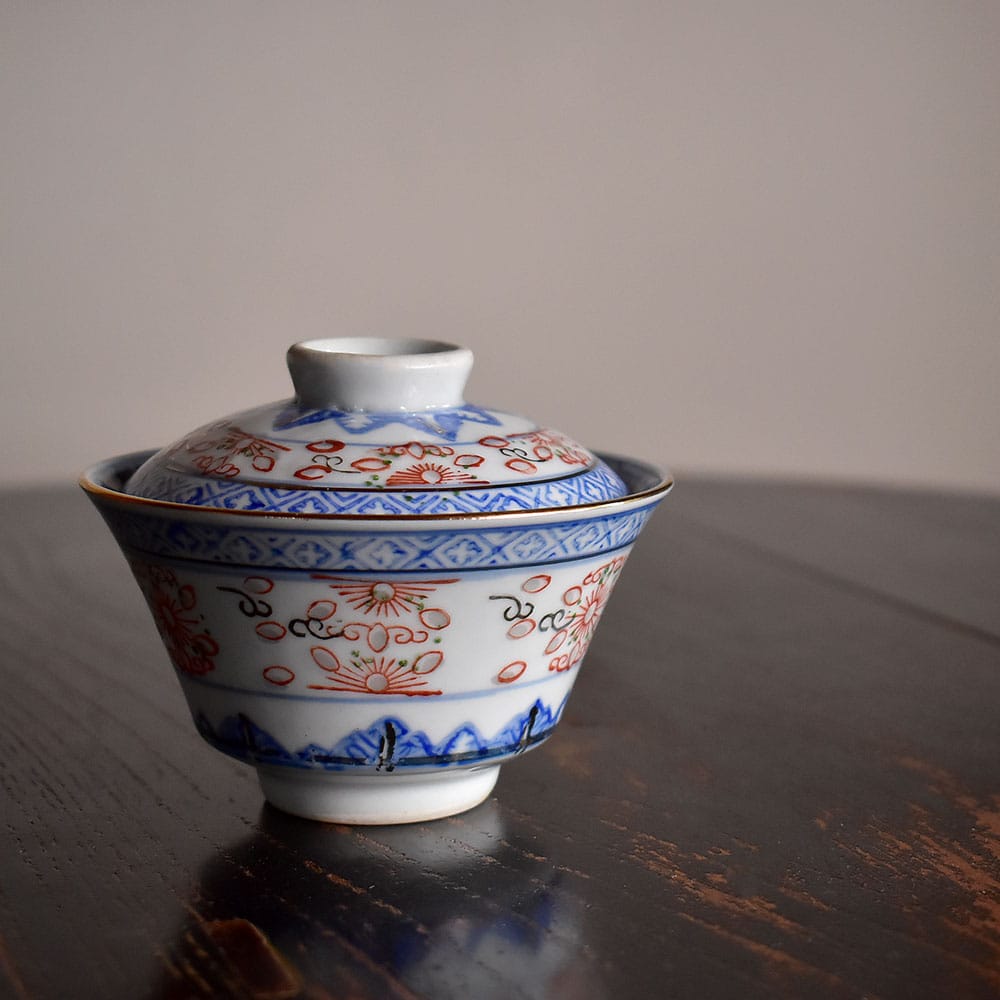


This blue and coloured reticulated gaiwan features a proper yet slightly rough form, typical of early or folk kiln wares. The body is relatively thick, with uneven glaze lustre and somewhat freehand cobalt lines, giving it an authentic handmade texture. The vessel is crafted using the traditional reticulated carving technique, with tiny translucent holes visible when held to light. Under the glaze, blue decoration is applied, while red and green overglaze enamels add a lively contrast. Though the colouring lacks delicacy, it carries a rustic charm. The lid, bowl, and saucer form a complete three-piece set, simple and steady in proportion, reflecting the aesthetics of old-style Jingdezhen porcelain.
Reticulated porcelain, also known as ‘transparent porcelain,’ first appeared during the Jiajing period of the Ming dynasty and reached its peak during the Kangxi and Qianlong reigns of the Qing dynasty. Its distinctive technique involves carving fine holes into the clay body before glazing and high-temperature firing, allowing glaze to fill the openings and form translucent ‘windows.’ When illuminated, these patterns emit a soft glow. Due to the complexity of the process and its low success rate, reticulated porcelain has long been regarded as one of Jingdezhen’s unique crafts. By the late Qing and Republic periods, blue-and-coloured reticulated gaiwans became common household items—less refined in craftsmanship but closer to everyday life.
This particular gaiwan belongs to that period of practical ware. Though not luxurious, it embodies the warmth of hand-fired ceramics and the quiet charm of daily use.


Reviews
There are no reviews yet.